


Search the site:
Delightfully Boring: Your Business Doesn’t Need More Drama
You want to get paid, do good work, and have a damn life. So why does running your business feel like you’re constantly preparing for something to go wrong?
There’s always another prediction, another thing you’re supposedly behind on, another reason to question everything you’re doing.
At some point, you need to be able to say: this deserves my attention, and that can stay the hell off my to-do list.
That’s what we’re talking about today: building a delightfully boring business you can depend on, even when everything around you feels uncertain.
I’m so excited to talk today about one of my favourite things: building a delightfully boring business. In fact, I’m kicking off a new series looking at some of the specific ways you make your business more boring.
In this context, boring is a good thing. Boring is how you get paid, have a life, and stop questioning your entire business every time someone predicts the end of your industry. (Do you know how many things I’ve seen “die” in the last 20 years which are still here?)
For service business owners, especially those working solo, uncertainty outside your business can quickly become urgency inside it. Staying aware of what’s happening matters, but it’s easy to get pulled into a spiral of questioning everything.
You need a way to decide what actually deserves your attention, so you can respond thoughtfully without constantly changing your plans.
Of Course You’re Worried. This Pays Your Bills.
Let’s acknowledge something first: there are always legitimate reasons to worry.
Your business pays your bills. You’ve spent years developing your expertise, building relationships, and booking work you’re good at. Of course you care about whether clients will keep hiring you and whether you’ll keep making the money you need.
You also want to know that you’ll recognize when something needs to change. That you won’t miss an important development because you were heads down in your client work.
So when someone confidently tells you that your way of doing business is about to stop working, it can really get under your skin.
Especially if you’re already dealing with a slower month, a client wrapping up, or inquiries that haven’t turned into booked work yet. You might start wondering whether that’s evidence of something bigger. Maybe this person knows something you don’t or you’re missing something major.
Paying attention to what’s happening inside and outside your business is critical, and of course, your concerns deserve consideration.
But you need some room between hearing something concerning and deciding what it means for you. Otherwise, every prediction, trend, and sales pitch gets an opportunity to completely rearrange your priorities.
And it’s difficult to build anything dependable when you’re constantly being pulled in a different direction.
Now You’re Worried AND Overextended
As someone with diagnosed anxiety, I know how appealing it can be to do something—anything—when you’re worried.
Researching a new offer or changing your marketing can feel like you’re getting ahead of the problem. You have a project. A list. Something you can do with all that anxious energy.
For a little while, that can help.
But feeling better for an afternoon doesn’t tell you whether you’ve made your business more stable. You may have given yourself another project while the thing that really needed your attention is still sitting there.
This is where trend (or tactic) hopping becomes a problem. You hear that one approach isn’t working anymore, so you switch to another. Before you’ve had time to see what happens, someone tells you something better exists.
You can also get stuck researching every possible option because you’re so afraid of making the wrong decision. The more advice you consume, the harder it becomes to know what the hell to even do.
Meanwhile, a potential client still needs a follow-up. The proposal still needs to go out. The pricing decision you’ve been putting off is still waiting.
You’re spending your limited time preparing for every possible doomsday scenario while your business desperately needs your attention right now.
All of that makes it so much harder to create the stability you’re looking for.
Please Be Discerning About What You’re Being Sold
Some of that urgency has been deliberately created.
There are people who know you’re worried about AI and are happy to use that worry to sell you something. Celebrity entrepreneurs have been telling service providers to stop selling services for as long as I’ve been in business.
They make a case for why what you’re doing is a problem, then offer you a way out.
And when you’re worried about your income, someone who sounds sure of what to do can be appealing, especially when they back it up with big claims and glowing testimonials.
But those testimonials don’t tell you whether their advice makes sense for your business.
For example, let’s look at creating a low-ticket offer. It’s sold as a way to protect your income and stop relying so much on client work.
But what would doing that require from you?
You’d need something people want to buy, time to create it, and a way to reach buyers and keep making sales, all while continuing to serve your clients.
That creates new demands on your time and energy. So before you take that on, you need to know whether it would make your business more stable or give you more work.
On the flip side, you might have an established service that people already buy, but no consistent way to stay in touch with past clients. Or you might be fully booked at prices that no longer make sense. Those smaller, more strategic changes are right there waiting to be handled before you spend months chasing something new.
Focusing on those boring decisions may not feel exciting, but they will help create more stability on a day-to-day basis in your business.
Before You Change the Whole Damn Thing
When that worry creeps in, stop and ask what’s causing it. What’s really happening? Is the thing you’re worried about even true for your business?
There’s a difference between noticing a change in your own business and hearing someone declare that everything is changing. (And if this is feeding your worry, I highly recommend getting off social media already.)
Let’s say someone says clients aren’t buying services anymore, but are clients still buying yours? If they say a marketing approach is dead, is it still bringing you inquiries and clients?
And if something has changed, take a closer look.
Say inquiries have slowed down. That’s worth paying attention to. But before you decide AI has killed your business and you need to start selling $27 PDFs, look at what’s happening.
Have your usual referral sources gone silent? Have you been buried in delivery and stopped staying in touch with people? Are inquiries coming in but getting stuck somewhere in your sales process?
Yes, you might need to make some changes. But understanding where the problem is gives you a useful place to start, and a reason for change beyond “I’m freaking out.”
Look at your actual situation: your clients, the services you sell, the money coming in, and your capacity. Coming back to the facts gives you a realistic baseline for deciding what needs to change and what you can leave the hell alone.
Then you can consider your options. Does this matter to your business? Why does it matter? Does it need your attention right now?
Sometimes there’s a change worth making. Sometimes you need more information. Sometimes you can keep an eye on something while continuing with the work you’ve already committed to.
You’re in charge of those decisions. You can take a concern seriously without immediately turning it into an emergency.
Make It Steadier, One Decision at a Time
Once you understand what truly needs attention, then you can make a change that addresses it.
An offer might need a pricing adjustment. Your scope might need to be more specific. You might need a consistent way to stay in touch with people who could hire or refer you.
These can seem small compared with launching an entirely new offer. But look at what they can do for your business.
A scope change can stop the same extra work from eating into every project. A pricing adjustment can help you earn what you need without taking on another client. Staying in touch with past clients gives you somewhere to start when you have availability.
Each of those decisions can make your business more peaceful, predictable and profitable because you know what the work requires, what it pays, and how it fits into your schedule.
Best of all, these changes can build on each other. More realistic project timelines help you make better commitments. Better pricing gives you more room in your workload. Having room in your workload makes it easier to keep marketing while you’re delivering client work.
That’s how smaller decisions compound into a business that has way less drama and feels stable.
Marlene, a communications advisor and member of the Staying Solo Squad, is a good example of this in action.
When she joined, she had an established business with steady clients. She wanted support and fresh ideas to keep improving it.
She worked through changes step by step, with guidance from the Squad. She refined her pricing, strengthened her boundaries, adjusted her weekly structure, and made her client experience more proactive.
Over time, those changes helped her become more efficient without working more hours. She also had 88% year-over-year growth from these changes.
What matters here is the way those improvements came together. She kept working on her business, making decisions and putting them into practice with support.
That’s something you can do too. Your business can already be working and still benefit from thoughtful attention. You can address a part that’s become difficult, improve something that’s been overdue, and keep building from there.
Let Your Business Be Delightfully Boring
A delightfully boring business is peaceful, predictable, and profitable. You know how you make money, what it takes to deliver your work, and how you bring clients in. Your workload fits your capacity, and the money you earn actually pays you properly.
Having something dependable helps you settle the eff down long enough to look at what’s happening and do something useful about it.
You know what’s booked and where you have availability. If you need more work, you have somewhere to start. If a project isn’t paying enough, you can look at the pricing and scope. You can identify a specific issue and work through your options without questioning your entire business.
That’s why you want your business to be boring in the best possible way. When you build a boring business, you can spend more time on what supports your income, protects your capacity, and strengthens your business. Most of all, you can stop overworking and go live your life.
There will still be slower periods and changes you didn’t see coming. But you’ll have something solid to return to, so every outside development doesn’t have to become a 911-level emergency.
Think of it this way: Your business can support you through uncertainty instead of adding to it.
Boring Gives You Room to Breathe
There’s enough uncertainty in the world. Your business needs to give you stability.
You can build that stability by understanding what’s happening in your business and making thoughtful decisions about what needs to change. Small adjustments that help you earn more consistently, protect your capacity, and keep work coming in.
And when something does change, you have a foundation to work from. You can consider your options and respond without throwing everything into chaos.
That’s what makes a business delightfully boring. You can depend on it to support your life even when there’s plenty happening around you that you can’t control.

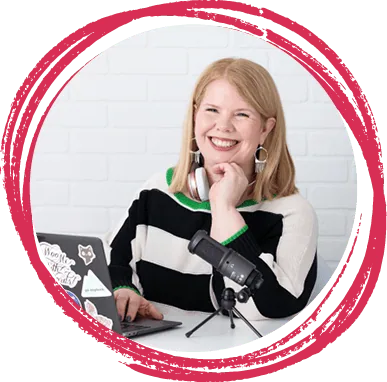
I’m Maggie Patterson (she/her), and services businesses are my business.
I have 20+ years of experience with client services, am a consultant for agency owners, creatives, and consultants, and vocal advocate for humane business practices rooted in empathy, respect, and trust.






For Solo Business Owners

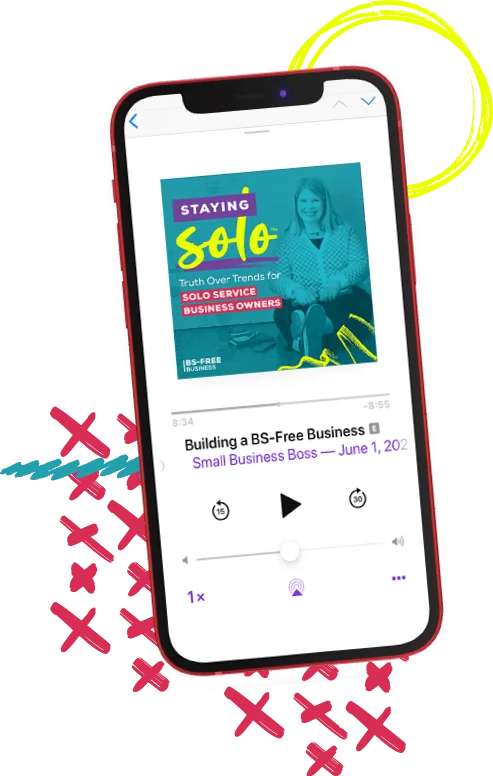
Growing a solo service business is tough.
It’s even harder when you’re bombarded with BS advice that steers you away from your values and why you started your business in the first place.
This is the podcast for solo creatives and consultants who want to remain as a team of one and have zero interest in the hustle and grind of typical business teachings.
Subscribe now and never miss an episode.



For Micro Agency Owners

Most podcasts for agency owners obsess over revenue growth as the ultimate success metric.

But here’s the truth: not everyone wants to make millions. Your goal might be to build a sustainable business that lets you have a life and doesn’t run you into the ground.
Join me as I spill my shameless confessions and share everything I’ve learned about building a micro agency that skips the BS of tired and typical agency teachings.
Follow Now on All Major Podcast Platforms