

Search the site:
The Beauty of Boring: A Business That Leaves Room for Life
Some business advice assumes every spare hour belongs to your business. Take another client. Sell more. Hire. Endlessly scale.
Don’t want to? You’re “thinking too small” or running “just a lifestyle business.”
As if getting paid and having time to enjoy your life is something to apologize for.
Eff that. Seriously. No apologies needed.
In this episode, we’re talking about the beauty of a boring business—and how to get paid well with enough time and energy left to enjoy the life you’re working for.
In Defense of the Lifestyle Business
Welcome back to our series on building a delightfully boring business, and I’m excited to talk today about the “delight” part of it.
Let’s start by defining what I mean when I talk about a lifestyle business.
It’s a business designed to provide the income you need while supporting how you want—or need—to live. Your priorities shape decisions about its size, workload, and growth.
That can look like a solo business. It can look like working part-time. It can mean building something that accommodates caregiving, disability, or the realities of your health.
It can also mean wanting time for your friends, hobbies, or an afternoon where nobody needs anything from you.
When people dismiss that as “just a lifestyle business,” it’s insulting. Starting a business is hard. Keeping one going takes skill, effort, and decisions nobody else will make for you. Having a small business doesn’t mean you’re playing business.
The cold, hard fact I’ll never stop sharing is that most businesses are solo businesses. A February 2026 report from the U.S. Small Business Administration says 82.3% of small businesses have no paid employees.
That stat makes it clear that solo business owners are the majority, and I’m willing to bet many of them would identify as lifestyle business owners. Which is why I’m so committed to normalizing this conversation. We need to stop disregarding these one-person businesses and treating them as being less than.
Another part of this dismissal bothers me.
We don’t all arrive at self-employment with the same options. Traditional employment can shut people out or make it difficult to meet their needs, whether that’s because of discrimination, disability, caregiving, or workplaces that expect everyone to function in the same way.
For some people, the “lifestyle” their business accommodates includes medical appointments or caring for someone who needs them. Or creating an opportunity they simply would never get in a corporate setting.
2023 data from Statistics Canada shares examples of this in action. “Men were more likely to indicate they were self-employed to earn more money than as an employee (11.8% vs. 5.2%) and to have autonomy and control over work hours, wage rates or location (39.2% vs. 36.5%). In contrast, women (12.4%) were more likely than men (8.9%) to indicate that they were self-employed to achieve a better work-life balance, to experience less stress or for health reasons.”
The same data also showed that landed immigrants were more likely to be self-employed because they couldn’t find work as employees.
Businesses built to address very real challenges are no less legitimate than any other business, and honestly, a lifestyle business gives us a way to work and not let it take over our lives.
Corporate Rules Don’t Apply Anymore
A lot of us leave traditional employment because we want to do things differently. We want flexibility, more control, and the ability to decide how we spend our days.
Then we get into business and recreate the same conditions we decided to leave.
For example, we assume a full workweek means 40 hours or more. We make ourselves constantly available. We feel uncomfortable when our calendars have space in them.
We start treating exhaustion as evidence that we’re taking the business seriously.
That doesn’t come out of nowhere. Capitalism benefits from teaching us to put work at the centre of our lives. We learn that being productive makes us worthy, and hard work is how we earn everything else.
That is why it can feel so uncomfortable to stop, even when we technically have the freedom to.
Rest becomes something we have to justify. Hobbies become things we should get good at or turn into income. We talk about taking breaks because they’ll help us be more productive when we return.
Even when we step away from work, we’re still making the case for how it serves work.
Political theorist Kathi Weeks examines this in her work on the work ethic. She challenges the idea that work is inherently good and should be the central focus of our lives, and I can’t agree more.
When you run your own business, you can’t just challenge the rules; you can change them.
You can work hours that fit your life. A 40-hour week doesn’t have to be your default. You can start later, take Wednesdays off, or build your schedule around caregiving and your energy. Skip meetings that could be emails, ditch arbitrary dress codes, and stop treating an immediate reply as proof you’re good at your job.
What Would Genuinely Delight You?
When I say “delight,” I mean pleasure, enjoyment, and satisfaction. Having the space to do things that feel good to you.
That might be spending time with people you love. Creating something. Reading. Moving your body. Being outside. Following an idea because it interests you.
Sometimes it’s having time to think without needing an answer. Sometimes it’s resting because you’re tired.
It doesn’t have to be impressive or expensive, and you don’t even have to post about it.
Your work can bring you delight. I really enjoy parts of my work. But work doesn’t have to provide all the meaning, satisfaction, and identity in your life.
You get to have other things.
There’s a big difference between having time left and having something left to give. You can technically have a free evening and still be too depleted to enjoy anyone’s company or do something you were looking forward to.
If all your time outside work goes toward recovering enough to do it again, where does enjoyment fit?
We talk so much about revenue and accomplishments when we talk about whether a business is working. I want us to consider what it leaves room for.
Can you enjoy your life alongside it? Do you have energy for something other than delivering the work and keeping yourself functional?
Think about how easily we accept a business goal as a reason to rearrange our lives. We can explain why a launch needs extra hours or why a client project has taken over the week. But an afternoon doing something we enjoy? Suddenly we feel like we need a better reason.
That double standard follows us into the time we do take off. We feel guilty for reading when there are emails waiting. We check messages while spending time with friends. Our bodies are somewhere else, but part of our attention is still at work.
Your delight needs some of that attention back. You deserve to be present for the things you chose to make time for. Trust me, your business can and will survive you being interested in something else. (In fact, it will likely be better for it.)
The Real Life Rule in Action
Work will take up all the available room if you let it.
There’s ALWAYS another task, another idea, another thing you could improve. Waiting until you’re finished to have a life is a terrible arrangement, because you’ll never know when you’ll be finished.
The shift I want to offer is this: decide what your life needs before deciding what your business can take on. I call this the Real Life Rule. Build your business around your life, not the other way around.
So take the time to zoom out. Look at what you’re already committed to, what needs your attention, and what you want to prioritize.
Include the things you enjoy. Include the people you want to spend time with. Include your need for rest.
Then consider what you can reasonably give to the business.
Yes, you need to earn a living. You also can’t hustle indefinitely. As I share in my book Staying Solo, some seasons call for striving, some for sustaining, and some for slowing down.
I’ve worked a flexible schedule throughout my business. When my son was little, I worked part-time around part-time daycare. When my parents were sick and dying, I could be where I needed to be.
I can rest when I’m unwell. During seasons when my mental health needs more attention, I adjust how I work.
That flexibility matters to me, and I make decisions to protect it.
I’m particular about my calendar. I choose work that doesn’t require emergency turnarounds. I don’t want clients who bring drama or expect everyone around them to operate on hustle culture. I have good boundaries.
That’s me taking my business and my life seriously. I’m ambitious about lots of things, but not all of them are in my business.
Not Every Opportunity is an Opportunity For You
Touching on ambition, I want to remind you that an opportunity can be good for your business and still ask more of you than you want to give.
I think about capacity in terms of time, energy, emotional demands, and sensory demands. I also ask what I’m gaining and what I’m giving up.
Travel to in-person events is a good example.
In theory, I love it. I like seeing people and making those connections. But I’m tired afterward, I’m out of my routine, and the experience has often cost me more than it’s given me.
A few events align enough to be worth it, but I’ve come to accept that most aren’t for me.
Speaking is similar. I know being on stages could be good for my business. I can recognize that and still say no.
I don’t need to pursue every possible business benefit.
There are trade-offs in every direction. Turning something down can mean giving up money or visibility. Saying yes can mean giving up energy, time with people you care about, or routines that help you function.
Consider what you need, what you want, and what you’re willing to exchange for it.
Your answers can and will change. Something you enjoyed five years ago might take more out of you now. You might have different responsibilities, different interests, or a different tolerance for being away from home.
You can adjust without treating an earlier version of yourself as the standard you need to return to.
There will also be times when you choose the extra work because you need the money. That’s real. Having bills to pay can limit your choices. But you can still recognize the cost, rather than deciding that pushing through is how your business should operate forever.
Boring Leaves Room for the Good Stuff
A boring business can be beautiful, because it leaves you time, energy, and attention to enjoy being a person outside your business.
There’s beauty in making a plan with a friend and trusting you can keep it. In having enough attention to listen when someone tells you about their day. In being curious about something that has absolutely nothing to do with your clients.
These are everyday experiences, but they matter.
A business that consistently makes them possible is doing something valuable for you. It deserves credit, even when there’s no impressive milestone to announce or new achievement to share with the internet this week.
You can have a solo business, work part-time, and be happy with it. You can enjoy your clients and also look forward to being done for the day. You can be satisfied with what you’ve built without needing to turn it into something bigger.
Delight deserves consideration in how you run the business and how you live alongside it. When you look at what you’re taking on, what you’re committing to, or what you’re working toward, you get to ask whether it feels good to you.
You don’t have to postpone enjoyment until you hit another revenue goal. And you don’t have to turn enjoyment into another thing to achieve.
So here’s the question I want to leave you with: what would genuinely delight you? And does your business leave you room for it?

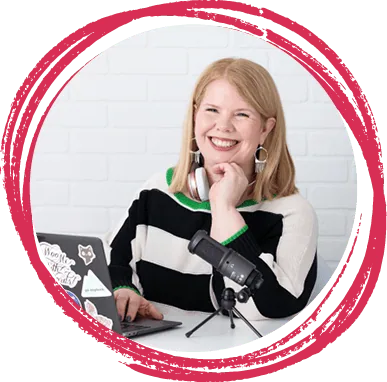
I’m Maggie Patterson (she/her), and services businesses are my business.
I have 20+ years of experience with client services, am a consultant for agency owners, creatives, and consultants, and vocal advocate for humane business practices rooted in empathy, respect, and trust.





For Solo Business Owners

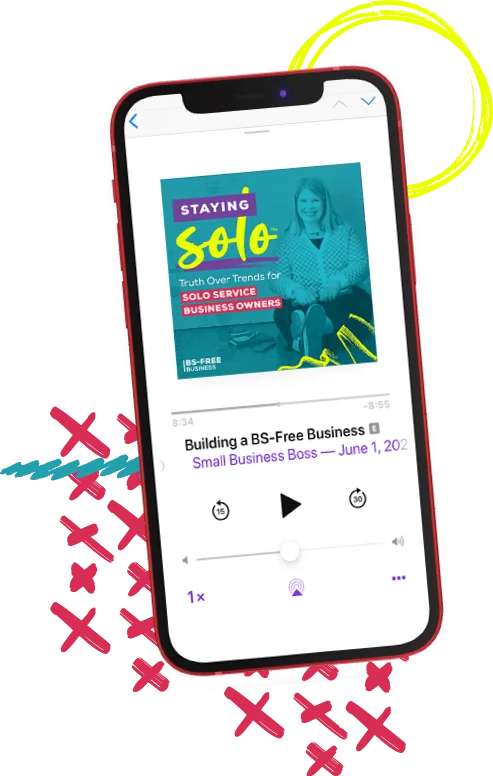
Growing a solo service business is tough.
It’s even harder when you’re bombarded with BS advice that steers you away from your values and why you started your business in the first place.
This is the podcast for solo creatives and consultants who want to remain as a team of one and have zero interest in the hustle and grind of typical business teachings.
Subscribe now and never miss an episode.



For Micro Agency Owners

Most podcasts for agency owners obsess over revenue growth as the ultimate success metric.

But here’s the truth: not everyone wants to make millions. Your goal might be to build a sustainable business that lets you have a life and doesn’t run you into the ground.
Join me as I spill my shameless confessions and share everything I’ve learned about building a micro agency that skips the BS of tired and typical agency teachings.
Follow Now on All Major Podcast Platforms