

Search the site:
This is What Paid & Peaceful Looks Like
What if the next thing your business needs isn’t another offer, client, platform or plan?
What if you need to calm the fuck down long enough to decide what you’re actually trying to build?
Because when everything feels important, every opportunity becomes an obligation and every single decision becomes harder than it needs to be.
There is another way to run your business. And that’s what this entire series has been building toward.
So in this episode, we’re bringing all five pieces together—enough, comfy money, your version of success, an identity beyond your work and capacity as currency—to help you make decisions that move your business forward, pay you better and give you more peace.
Over the last five episodes, we’ve talked about enough, comfy money, choosing your own version of success, the myth of the obsessed entrepreneur and treating your capacity like currency.
And today, I want to bring all of those ideas together to wrap up this series.
Because none of these things exist in isolation:
- Your definition of enough shapes how much money you believe you need to make.
- Your relationship with money shapes the version of success you pursue.
- Your definition of success shapes how much of your identity you hand over to your business.
- And all of that determines how you spend your time, energy and capacity.
Together, they shape the decisions you make about your business every single day.
What work you do. How you do it. Who you do it for. What you charge. How you structure your schedule. Which opportunities you pursue. Which ones you decline. And what you decide you’re no longer willing to do.
That’s how you become Paid and Peaceful.
Because there’s no perfect plan or “right” decision every single time. And it’s definitely not by doing every damn thing the online business world tells you a successful business owner is supposed to do.
You become paid and peaceful by making deliberate decisions that help you create both. And yes, I said both.
You’re permitted to want a business that pays you well and gives you more peace. You don’t have to sacrifice one to earn the other.
Stop Propping Up Systems That Don’t Serve You
The entire premise of this series is that there is so much more you can do with your business when you approach your work and business differently.
You can rethink success, money, growth, capacity and the role your business plays in your life. You can make choices based on what actually serves you instead of automatically propping up systems and expectations that never served you in the first place.
Because most of us have been handed a very specific story about how business works.
Be early. Be everywhere. Try everything. Take the opportunity. Add the offer. Sign the client. Make more. Grow faster. Keep going.
And if you’re exhausted, overwhelmed or starting to resent the business you built, the proposed solution is usually to become more efficient so you can fit even more into it.
No wonder so many experienced service business owners are tired.
And if that’s you, I want to remind you that you’re trying to operate inside a definition of success that demands more from you than you ever agreed to give it.
And because these rules are treated like objective facts, you can far too easily start gaslighting yourself into doing things you don’t even want to do:
- You tell yourself you should take one more client because the money is available.
- You should add another offer because someone might buy it.
- You should be on another platform because your next client could be there.
- You should grow the team, scale the offer or chase the next revenue goal because that’s what a serious business owner would do.
You end up doing too much and lapsing right back into hustle, not because you consciously chose it, but because you were afraid of missing an opportunity or falling behind.
Focusing on becoming Paid and Peaceful gives you another way to make those decisions.
Start With Enough
In the first episode, we talked about why enough is a radical business strategy.
When you know what enough looks like, every opportunity to make more money stops feeling like an obligation. You have a stopping point—and something more useful to optimize for than endless growth.
That doesn’t mean playing small or never wanting more. It means growth becomes a choice, not a permanent requirement.
You can pursue more money, impact or different work because it serves you, not because you believe you’re failing if this year doesn’t beat the last one.
Knowing what’s enough lets you calm the fuck down and become far more discerning about what deserves your attention.
Decide What Money Is For
Then we talked about comfy money.
Revenue doesn’t tell you whether your business is working. What matters is what the business pays you and whether that money creates comfort, security, options and freedom in your actual life.
There’s no prize for running an impressive-looking business that leaves you taking whatever scraps remain at the end of the month.
Knowing what money is for helps you decide what the business needs to earn, what you need to charge and which work is worthwhile.
One more client may add revenue. But if they require extra admin, constant communication and hours you don’t have, are you meaningfully more paid?
Or do you simply have more revenue and more work? Comfy money reminds you that not every available dollar is equally valuable.
Choose Your Version of Success
In the third episode, I asked: What if there’s another version of success?
There’s plenty of space between keeping everything the same and pursuing growth at all costs.
Your version may mean making more while working less, doing deeper work with fewer clients, taking long stretches of time off or staying a team of one.
You get to decide.
Once you know what you’re building, you can stop asking, “Could I make this work?”
You’ve made plenty of things work.
The better question is: “Does this belong in the business I’m building?”
An opportunity can make money, work brilliantly for someone you respect and even sound fun, and still distract you from what you’ve decided matters.
Your Business Isn’t Your Entire Identity
Next, we tackled the myth of the obsessed entrepreneur: the idea that caring about your business means letting it consume you.
Your business can matter deeply without becoming your entire identity. You can take your work seriously without letting it take everything from you.
There will always be more tasks, ideas or goals. If your worth is tied to how productive or successful the business appears, saying no can feel like a personal failure.
But when the business supports your life instead of replacing it, you can make different choices.
You can protect your evenings. Leave room in your schedule without monetizing it. Stop doing work you’ve outgrown, even when you’re perfectly capable of doing it.
You can make decisions as a person with a life, not an infinitely expandable business resource.
Treat Capacity Like Currency
Finally, we talked about capacity.
Your time, energy, attention, emotional bandwidth and sensory capacity are finite. Everything you say yes to is some combination of them.
And nothing new enters your business for free.
A project may require 20 delivery hours, but that’s rarely its full cost. There’s communication, admin, decisions, context switching, schedule disruption and sometimes recovery after the work is technically finished.
Treating capacity like currency means you stop asking whether you can squeeze something in. You ask what it will cost, what it will displace and whether the trade is worth it.
Filling every available hour with client work may pay you today. But it can leave you without the capacity to fix the pricing, offers or marketing that could help you make more without continually squeezing in one more client.
That’s why you can’t make decisions about being paid without considering what they’ll cost you in peace.
Peace May Require Hard Conversations
There’s an important distinction we need to make here. Protecting your peace doesn’t mean avoiding every uncomfortable decision.
Sometimes what looks like peace is actually avoidance.
You don’t have the pricing conversation because you want to avoid the friction. You don’t say no to the request because you don’t want the client to be disappointed. You don’t enforce the boundary because dealing with their reaction feels exhausting. You don’t retire the offer because it still makes some money.
Not doing those things may create relief today. But what happens downstream?
You spend the next six months underpaid, annoyed and delivering work you already knew needed to change.
A decision isn’t peaceful simply because it avoids drama today.
Sometimes the most peaceful choice is the uncomfortable one that prevents six more months of resentment, overwork or being underpaid.
So when you’re making (or avoiding) a decision, try looking further ahead:
- Will this meaningfully improve your salary or profit, or will it simply create more revenue and more work?
- What will it require from your capacity beyond the obvious hours?
- Where will the work go in your schedule?
- What will have to move, shrink or disappear to accommodate it?
- What precedent are you setting with a client—or with yourself?
- What won’t you be able to pursue, improve or finish because you said yes?
- Are you avoiding a difficult conversation now only to create a bigger problem three months from now?
- And does this decision give you more choices later, or lock you into work, pricing or expectations you already know you don’t want?
In other words: What will this decision pay you, and what kind of peace will it create or cost you downstream?
What Paid & Peaceful Looked Like for Me
One of the clearest examples from my own business was my decision to let go of corporate work at the end of 2025.
It wasn’t a quick decision, and it definitely wasn’t a dramatic “quit the reliable work and bet on yourself” moment.
I made it very deliberately, with plenty of financial runway.
The corporate work gave me reliable money. Letting it go meant taking a temporary pay cut, and walking away from that money was hard.
But I could also see the downstream effects of continuing.
The work was consuming time and capacity I needed if I wanted BS-Free Business to grow. I couldn’t keep committing that time somewhere else and expect this business to become what I wanted it to be.
The corporate work was paying me then, but keeping it indefinitely would prevent me from building the business that could pay me later.
Letting it go also gave me something incredibly valuable: CONTROL.
I now have more control over my time, schedule and the work I’m doing.
Taking a temporary pay cut wasn’t choosing peace instead of money. It was a deliberate decision designed to create both. And every principle from this series played a role.
- Knowing what enough looked like meant I didn’t need to maximize every available dollar.
- Understanding comfy money meant I knew what I needed and had enough runway to make the transition responsibly.
- Choosing my version of success meant I knew I wanted to build BS-Free Business, not maintain corporate work indefinitely.
- Separating my identity from my work meant I didn’t need to prove I could keep doing both forever.
- And treating capacity like currency showed me that the corporate work was costing far more than the hours on my calendar.
That is what Paid & Peaceful looks like in practice. It’s about knowing exactly why you’re doing what you’re doing and making decisions that move the business toward what you actually want.
You’re Allowed to Want Both
If you believe the only way to get paid more is to sacrifice more of your peace, I want you to question that belief.
Where did it come from?
Who benefits when you believe that more money must always require more work, more availability and more of yourself? And what is it costing you to keep running your business that way?
Being peaceful doesn’t mean you’re being passive. Far from it. You’re actually making decisions that move the business forward without automatically demanding more of you. And being discerning because you know what you want, why you want it and what you’re willing to trade for it.
Being Paid & Peaceful isn’t reserved for people with easier businesses, fewer responsibilities or some magical ability to make every decision perfectly.
It becomes possible when you stop building according to what you’re supposed to want and start making deliberate decisions based on what you actually want your business to give you.
You don’t have to choose between a business that pays you and one that gives you peace. Your business has one job: to fund and support the life you actually want to live.
Being paid and peaceful is possible for you. And you don’t have to figure it out alone.
This is exactly the work we do inside the Paid & Peaceful Mastermind.
We look at your entire business, your money, offers, clients, capacity and the life your business needs to support, so you can stop reacting to whatever feels most urgent and make decisions based on what you actually want.
Because you don’t need more generic advice or another plan built for someone else’s business, brain or life.
You need support that helps you become more discerning, deal with what’s happening right now and keep moving toward a business that pays you well without taking everything from you.
You’re permitted to want both.
And Paid & Peaceful is where we make it happen.

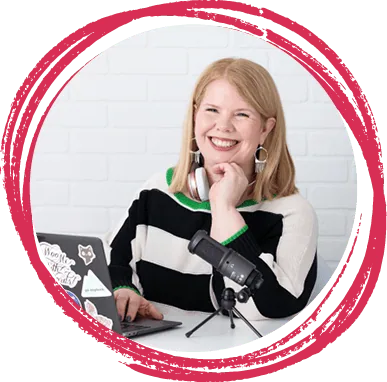
I’m Maggie Patterson (she/her), and services businesses are my business.
I have 20+ years of experience with client services, am a consultant for agency owners, creatives, and consultants, and vocal advocate for humane business practices rooted in empathy, respect, and trust.
Read or Listen to the Latest


For Solo Business Owners

Growing a solo service business is tough.
It’s even harder when you’re bombarded with BS advice that steers you away from your values and why you started your business in the first place.
This is the podcast for solo creatives and consultants who want to remain as a team of one and have zero interest in the hustle and grind of typical business teachings.
Subscribe now and never miss an episode.



For Micro Agency Owners

Most podcasts for agency owners obsess over revenue growth as the ultimate success metric.

But here’s the truth: not everyone wants to make millions. Your goal might be to build a sustainable business that lets you have a life and doesn’t run you into the ground.
Join me as I spill my shameless confessions and share everything I’ve learned about building a micro agency that skips the BS of tired and typical agency teachings.
Follow Now on All Major Podcast Platforms