

Search the site:
Capacity Is Currency: Spend It Where It Counts
You’ve optimized your calendar. Built the systems. Streamlined the process.
Automated what you could. And somehow, you’re still stretched.
So you assume you haven’t found the right productivity method yet—or that you need to become more disciplined, focused or efficient.
But what if your productivity isn’t the problem?
What if you’re asking yourself to do too much, under working conditions that make doing it even harder?
Because no Notion board can fix overcommitting. No time-blocking method can create energy you don’t have. And no automation can make an exhausting client stop costing you capacity.
In this episode, we’re looking at where your capacity is actually going, when supportive productivity tips turn toxic and the three questions that will help you decide what still deserves your time and energy.
Because your capacity is currency and you need to stop spending it like you have an unlimited supply.
Welcome back to the Paid & Peaceful series here on Staying Solo. So far we’ve talked about success, wealth, ambition and identity. Today, we’re talking about work.
More specifically, we’re talking about capacity.
Because your capacity is one of the most valuable resources in your business.
It determines how much work you can do, but it also influences the quality of that work, the decisions you make and how much of yourself you have left for your actual life.
Yet, most business advice treats your capacity like something you should constantly attempt to increase.
- How can you fit in another client?
- How can you create more content?
- How can you become more productive?
- How can you squeeze more output from the same number of hours?
At a certain point, that stops being supportive and starts becoming toxic.
Your capacity isn’t a personal failing to overcome. It’s a finite resource to protect.
What if Productivity Isn’t the Problem?
Let me be clear: systems can help. I’m a super fan of systems as they can make things so much simpler.
For example, if you’re losing documents, constantly searching for information or switching between tasks every three minutes, getting organized may give you some capacity back.
A supportive system should make the work easier.
But many of the systems we build become make-work projects of their own. They require so much maintenance that we end up working for the system instead of having the system work for us.
And sometimes, the system isn’t the issue at all.
The problem is that we’re asking the system to make an unrealistic amount of work possible.
- No Notion board or ClickUp project can fix overcommitting.
- A time-blocked calendar can’t make a five-hour project take 45 minutes.
- Automation can’t make an exhausting client less emotionally demanding.
- A productivity method can’t turn work you hate into work you suddenly have the energy to do.
- A new tool can’t protect your evenings or weekends if you keep agreeing to deadlines that require you to work them.
There are times when being more organized or focused helps us produce more, but there are also times when we’re simply expecting too much.
Our culture loves to turn systemic problems into individual failings. We’re taught that if we can’t keep up, the answer is to improve ourselves.
Become more disciplined or efficient.
But there’s a point where productivity advice becomes a way to avoid acknowledging that the working conditions themselves are unreasonable.
Would You Accept This From Your Employer?
Here are two questions I want you to ask yourself:
Would I accept these working conditions from an employer?
And:
What would I say to a friend who described these working conditions to me?
I also want to acknowledge that having control over our working conditions is a privilege. Many employees are dealing with completely unreasonable workloads, inflexible schedules and employers who don’t care what their bodies, brains or lives require.
They can’t simply decide to stop working Fridays, refuse a project or move their creative work to the evening.
As business owners, we have more agency.
Not complete control—clients, money, deadlines and life still impose very real constraints—but more ability to shape how we work than many people have.
That makes it even more important to question why we’re recreating the same working conditions we wanted to escape.
We won’t always get to work exactly when or how we want. But when we do have a choice, we can use it to build something more humane instead of becoming the worst boss we’ve ever had.
If an employer expected your friend to regularly work evenings and weekends, you’d probably tell them that wasn’t sustainable.
If their boss constantly added work without changing the deadlines, you’d recognize the problem.
If they couldn’t take a break without falling behind, you wouldn’t tell them they needed a better planner.
If they were ignoring what their brain and body needed to keep meeting unrealistic expectations, you wouldn’t praise their work ethic.
Somehow, when we’re self-employed, we can so easily normalize these things.
We tell ourselves that this is simply what entrepreneurship requires.
That we should be grateful for the work or that pushing through is the price we have to pay for running our own business.
This connects directly to the myth of the obsessed entrepreneur: the belief that successful business owners should always be working, thinking about work or looking for ways to get more done.
But running a business does not require you to create working conditions you’d immediately recognize as unacceptable anywhere else.
Being self-employed means you’re responsible for creating your working conditions. And sometimes, you’re going to be a terrible boss.
Your Calendar Isn’t Telling You the Whole Story
Capacity isn’t simply a question of how many hours you have available.
Time matters, but so do your energy, emotions and sensory needs.
Let’s say I need to write a podcast episode. I can put “write podcast” on my calendar for Monday at 10:00 a.m. all I want.
There may technically be two open hours.
But realistically, I know I do my best writing in the evenings or toward the end of the week. I need fewer distractions, and I often need time to work through an idea in my head before I sit down to write it.
If I ignore that and schedule the work based solely on an empty block, I may spend those two hours metaphorically pounding my head against my desk.
Then the spiral begins with me being a real asshole to myself thinking things like:
- If I were more focused, I could do this.
- If I were more productive, I’d be finished by now.
- If I were more organized, this wouldn’t be so difficult.
But the issue isn’t that I’m bad at writing or incapable of focusing. I’ve created the wrong conditions for the type of work I’m asking myself to do.
Creative work can be incredibly taxing. So can deep strategic work, problem-solving and anything requiring sustained concentration.
As an expert, you’re being paid to think. That thinking requires energy alongside time.
You cannot look at a 40-hour workweek and assume you have 40 hours available for your most demanding work. That isn’t how humans work.
Supporting Yourself Isn’t the Same as Overriding Yourself
Obviously, we can’t always work under our ideal conditions.
Sometimes the work needs to get done on Tuesday morning even if Thursday evening would be better. You can’t always wait until the mood, lighting, weather and position of the moon are perfect.
You need to understand how you work and create support when the conditions aren’t ideal.
When I need to focus, I use music. I shut off distractions. I may give myself a treat. I use outside accountability.
All of those things help me work through a constrained moment.
But there’s a difference between using supports and constantly looking for ways to override what you can realistically do.
Support says: “This needs to happen, so how can I make it easier on myself?”
Toxic productivity says: “How can I force myself to operate like this all the time?”
I’m not going to lie, being productive can feel good. Getting things done can be deeply satisfying.
The problem is when we become fixated on getting more done or start trying to optimize every part of ourselves.
The point of productivity shouldn’t always be more output, sometimes it’s going to be:
- Streamlining your work so you have space to think strategically.
- Creating a system so you can take a real lunch break.
- Making a process more efficient so there’s margin in your week.
Because when your calendar isn’t packed like a game of Tetris, you can breathe. One bad day doesn’t automatically become a bad week because you can move something, take a beat to regroup or respond to a headache, a family situation or a piece of work requiring more energy than expected without your entire week collapsing.
Margin is not wasted capacity. Margin is what makes you and your business more resilient.
Every Yes Has a Cost
To create better working conditions you’re going to require better boundaries.
Many service providers agree to work they shouldn’t be doing or aren’t being paid to do.
For example, a client asks for a small thing. You don’t want to be difficult or the conversation to become awkward so you say yes.
But the small thing turns out to require five hours. Or it becomes a recurring expectation. What began as a favour turns into an unpaid obligation.
Then the resentment builds, and resentment is bloody exhausting.
It makes the work less enjoyable, affects how you show up for your client and leaves you with less energy for your life outside work.
There’s always a cost to saying yes.
Sometimes the cost is completely reasonable. There’s a difference between something taking five minutes and something taking five hours. There’s a difference between doing something you genuinely don’t mind and agreeing to something you don’t even really do.
But if every yes costs you—and you’re always the one paying the price—that’s a problem.
You can be kind and generous and still have boundaries.
Sometimes serving the client well means telling them you’re not the right person to handle a request.
You can say:
“I know this seems like a simple request, but it requires X, Y and Z, and that isn’t in my wheelhouse.”
That doesn’t make you difficult or less of an expert.
Your client hired you because you’re an expert in a specific area, not because you’re supposed to be an expert in every possible thing they may need.
Knowing what isn’t in your lane shows that you’re a professional who understands the boundaries of your expertise.
One of my past mastermind clients had a major breakthrough with her boundaries when we worked together that had a serious impact on her working conditions.
“For the first time, I’m holding real boundaries—no work after 5:00 or on weekends. And when I do, it’s by choice.”
That last part is important. Protecting your capacity doesn’t mean creating a bunch of rigid rules you can never break.
You may choose to work late one evening. You may occasionally work on a weekend because you want to finish something or because doing it then works better for your brain.
But there’s a massive difference between choosing to do that and feeling like you have no other option because you’ve overcommitted, avoided a conversation or agreed to expectations you can’t sustain.
Better working conditions give you more agency over how and when you work.
The goal is to stop making boundary violations the default requirement for keeping your business running.
My Four-Day-Week Wake-Up Call
Moving to a four-day workweek a few years ago was a wake-up call for me.
Initially I assumed working one less day would mean getting less done but that wasn’t true at all.
Everything that mattered got done because I had to filter everything.
Some things simply became a no and came off my list. I stopped doing things I didn’t need to be doing, and nothing bad happened.
We all know that work expands to fill the time and capacity we make available for it.
Give yourself five days and you’ll find five days of work. Give yourself four days and you’re forced to become much more honest about what genuinely needs to happen.
I wasn’t magically more productive, but I was a hell of a lot more selective.
Your Capacity is Currency
You get to decide where you spend your capacity.
- Who gets your best work?
- Does all of it automatically go to your clients?
- How much goes toward the strategic work required to make your own business stronger?
- How much do you keep for your life?
Not every financially attractive project is worth what it costs.
A big client project may come with a very alluring number. But maybe you hate that type of work, the deadline is short and the client stresses you the fuck out.
The money may be good, but that doesn’t automatically make the work worth your capacity.
The same goes for work that’s completely opposed to your values. Sometimes the money isn’t worth what you have to spend emotionally, energetically or personally to earn it.
This is deeply personal.
Nobody else can tell you exactly where your capacity should go. But you do need to start treating it as something valuable instead of an endlessly renewable resource.
When you’re deciding whether something deserves your capacity, ask:
- Is this creating a meaningful result? Is it helping you book clients, make money, serve your clients well or reach a goal that matters right now?
- Is the result worth what this costs me? Consider more than the hours. What does it require emotionally? Energetically? Creatively? What does it prevent you from doing elsewhere?
- If I stopped doing it, what would actually happen? Not what you are afraid might happen. What would realistically happen?
These questions can be applied to client work and to the work of running your business.
Are your marketing activities helping you reach potential clients, or are you spending hours creating content because you believe you should?
Are your sales calls leading to good-fit work, or are you getting on calls with anyone who expresses the slightest interest?
Is that recurring task supporting the business, or has it remained on your list because you’ve never stopped long enough to question it?
You have a limited amount of time to work on your business. You have a limited amount of creative, strategic and emotional capacity, so spend it where it counts.
Hand Me the Mess. I’ll Find Your Starting Point
You cannot do everything, and I don’t say that as a challenge to overcome.
I’m not waiting for you to prove me wrong by becoming more productive.
Accepting that you can’t do everything is what allows you to become more strategic about what you choose to do—and it’s how you become paid and peaceful.
Inside the Paid & Peaceful Mastermind, we look at your business as a whole and make the decisions that help you earn more consistently without demanding more and more from you.
Together, we’ll work on getting you better clients, focusing on work you’re damn good at, creating offers potential clients are excited to pay for and setting pricing that’s actually profitable.
All while creating enough breathing room that your business doesn’t consume every available minute, thought or ounce of energy.
And you don’t need to figure out where to start. When you join, I’ll create your Capacity Compass. I’ll look at what’s taking up your time, energy and brain space, identify where you’re stretched too thin and map out what needs your attention first.
You can hand me the messy, overwhelming, I-don’t-even-know-where-to-start version of your business—and I’ll find your starting point.
Because you can have a successful business that pays you well and still have a whole-ass life outside of it.
That’s what you’ll build inside Paid & Peaceful.
Applications are open now. Book your consult by September 15 to get the Capacity Compass bonus, and join by September 18 to save $650.

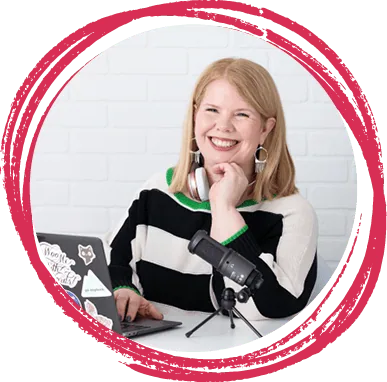
I’m Maggie Patterson (she/her), and services businesses are my business.
I have 20+ years of experience with client services, am a consultant for agency owners, creatives, and consultants, and vocal advocate for humane business practices rooted in empathy, respect, and trust.
Read or Listen to the Latest





For Solo Business Owners

Growing a solo service business is tough.
It’s even harder when you’re bombarded with BS advice that steers you away from your values and why you started your business in the first place.
This is the podcast for solo creatives and consultants who want to remain as a team of one and have zero interest in the hustle and grind of typical business teachings.
Subscribe now and never miss an episode.



For Micro Agency Owners

Most podcasts for agency owners obsess over revenue growth as the ultimate success metric.

But here’s the truth: not everyone wants to make millions. Your goal might be to build a sustainable business that lets you have a life and doesn’t run you into the ground.
Join me as I spill my shameless confessions and share everything I’ve learned about building a micro agency that skips the BS of tired and typical agency teachings.
Follow Now on All Major Podcast Platforms