

Search the site:
The Myth of the Obsessed Entrepreneur
A lot of us started businesses because we wanted more freedom.
More flexibility. More control over our time. More ability to work around our actual lives.
And then entrepreneurial culture handed us a version of success in which our entire lives revolve around the business.
How exactly did we get from “I want work to fit into my life” to “my business is my identity, purpose, hobby and personality”?
Because I think we may have lost the plot.
In this episode, we’re talking about why obsession isn’t the price of being a serious business owner, what happens when the business becomes too much of your identity, and how to put it back in its rightful place, so it can support your life instead of taking it over.
Table of Contents
Your Business Doesn't Need to Be Your Life's Purpose
One of the stories we’ve been sold about entrepreneurship is that your business should be your passion. Your purpose. Your big WHY.
And if it is, great.
But honestly? It’s not that deep for a lot of us.
You can be very good at something and enjoy doing it without believing you were put on this earth to do it.
If you didn’t have to work anymore, would you keep doing what you do now?
Maybe your answer is yes, but if it’s no, that’s totally okay.
Not every business is a vocation. Not every business needs a mission that changes the world. Paying your bills and making a living is reason enough to do the work.
Most of my clients didn’t start their businesses because they had a burning desire to become entrepreneurs.
They wanted flexibility. They wanted more control over their capacity. They wanted to do work they were good at without having their lives constrained by traditional employment.
They created an opportunity to work in a non-traditional way. That’s entrepreneurship too.
You don't have to build an empire. You don't have to scale. And you definitely don't have to turn being an entrepreneur into your entire personality.
Your Business Has a Specific Job
Your business exists to provide for you. You need to work. You need to make money. Your business gives you a way to do both.
Yes, it can give you other things too.
You can love your work. You can like your clients. Your work can be satisfying, challenging and creative. You can be incredibly proud of what you’ve built.
But your business doesn’t need to fulfill every human need you have.
It doesn’t need to be your primary source of identity, purpose, creativity, connection, challenge, validation, stimulation and self-worth.
Because when you expect the business to give you all of those things, every single thing that happens in the business starts carrying way too much weight.
When Everything Becomes Personal
So let’s say a client leaves. An offer doesn’t sell. Revenue is down. Someone doesn’t hire you.
Suddenly, it’s not simply something that happened in the business.
It becomes a story about you.
I'm not good at this.
I fucked this up.
Maybe I'm not as good as I thought I was.
Maybe I'm completely incompetent.
This can happen to any of us because we care about our work.
And for those of us who are neurodivergent, things like rejection sensitivity can make separating what happened from what we think it means about us particularly tricky.
This is where healthy coping mechanisms and resilience matter. Because so many things that feel deeply personal in business have very little to do with you.
A client may be dealing with budget cuts. Leadership changed. Their priorities shifted. The economy changed. Their own clients disappeared. Something happened internally that you will never even know about.
That doesn’t mean we never need to look at our own work or take responsibility when something isn't working.
It means we need to be careful about assigning meaning to it. A business outcome is information to work with. It’s not a conviction on your character.
Business Owner Is Just One of Your Identities
This is one of the reasons I think having an identity outside your business matters so much.
If the business is your be-all, end-all, when something happens to the business, it can feel like it’s happening to everything.
You’re not just a business owner. You may also be a swimmer. A crocheter. An avid reader. A gardener. A parent. A friend. A traveller. Someone who likes going to concerts or hiking or making weird things with your hands.
Those identities matter too, and they don’t need to become businesses.
You don't need your hobbies to have an ROI. You don't need to monetize them. You don't need to track your progress or become amazing at them.
You can do something simply because you like doing it.
We’ve become so obsessed with maximizing and optimizing everything that we can suck the joy out of the exact things that are supposed to make our lives richer.
Your business may give you creativity, adventure, connection, challenge and satisfaction.
But you can get those things elsewhere too. And when you do, the business stops being responsible for giving you everything.
Having a Life Is the Entrepreneurial Equivalent of Touching Grass
When your entire world revolves around your business, your world can get very small.
You work around the clock. Most of your friends are business friends. Your reading is about business. Your podcasts are about business. Your travel is connected to business. Even the things you supposedly do for fun somehow end up being in service of the business.
Having a life outside of that gives you perspective. You spend time with people who don't give a single shit about your latest offer. You do things you're not trying to monetize.
You have experiences that have absolutely nothing to do with your work, and really, it's the entrepreneurial equivalent of touching grass.
It reminds you what actually matters.
It also helps build perspective. When something goes sideways in the business, you have somewhere else to stand. Your entire sense of self doesn't rise and fall with whatever happened at work that day.
Stop Messing With Things That Are Working
The entrepreneurial obsession also shows up in our constant need to strive.
Too many business owners mess with what's working because they believe they should always be doing more.
More revenue. More offers. More clients. More followers. Another income stream. Another goal.
Because we've been told that if you're not scaling, you're failing.
Bullshit.
Your business needs to adapt and change over time. Your clients change. Markets change. Your life changes. Your capacity changes.
But adaptation is not the same thing as constant growth.
Sometimes the business is working. It's profitable. Your clients are happy. Your workload is manageable. You're making the money you need.
You can leave it alone. Your business is allowed to be boring.
One of my clients used to do four major launches a year, plus smaller launches in between. Now she launches her mastermind once a year. The revenue from that program is back up; she’s spending significantly less time and money launching, and she had her income booked out for the year by January.
She could look at that and immediately ask, Okay, what’s next? How do I grow this? What else could I sell?
But why? She’s making the money with less work. That’s doing better.
And that’s what doing better looks like for a lot of my clients. It’s not doubling their revenue every year. It might be making slightly more without having to work more. Cutting their hours without taking an income hit. Or maintaining what they’ve already built while making more space for everything else.
You get to decide what doing well looks like for you.
There’s a Difference Between Commitment and Obsession
There will absolutely be seasons when your business needs more from you.
You may work a little extra. You may have a busy week. You may have something big happening that temporarily takes up more of your time and attention.
That’s not the problem.
The problem is believing your business is entitled to everything you've got indefinitely.
You aren’t superhuman.
You can’t override your capacity forever. You can’t work around the clock forever. You can’t postpone your life until some imaginary point where the business finally becomes enough.
Because if you haven't decided what enough looks like, that point will keep moving.
There will always be another goal. Another revenue number or opportunity you could pursue.
And eventually, you can end up resenting the exact business you built to give yourself more freedom.
You can be committed without being obsessed.
Commitment means showing up. Doing good work. Taking care of your clients. Making thoughtful decisions. Dealing with problems when they happen.
It also means being conscious of your capacity and being willing to let the business be boring when boring is working.
The Cult of the Entrepreneur
We need to question why we're so invested in the idea of the obsessed entrepreneur in the first place.
As a society, we love entrepreneurship, and at this point, it’s pretty culty.
We celebrate and exalt it. The entrepreneur is a cultural hero: someone willing to take risks, make sacrifices, work harder, and build something from nothing.
It's the American Dream wrapped up in late-stage capitalism.
And once entrepreneurship becomes something noble, sacrifice becomes noble too. Working constantly becomes evidence that you're committed. Obsession becomes admirable. Striving becomes part of the identity.
But entrepreneurship doesn't have to mean any of that.
At its most basic level, we're simply creating an opportunity to do work in a non-traditional way.
That's it.
You can take what works for you from entrepreneurship and leave the rest.
Make Space for More Than Your Business
If you realize your business has become way too central to your identity, I don't think you need to fix it immediately.
Start by getting curious about why it happened.
What is the business currently giving you beyond money?
Is it your primary source of validation? Connection? Stimulation? Challenge? Creativity? Belonging? A sense of competence?
What has it displaced?
What did you use to do, care about or make time for that has quietly disappeared?
And most importantly, what do you want more of outside the business?
You can start with three simple prompts:
- My business is allowed to give me ______.
- It does not need to give me ______.
- I want more ______ in my life outside of work.
Then you need to make space for those things.
Space is one of the six parts of my Staying Solo framework for exactly this reason.
In this context, space means a lot of things:
That means literal space on your calendar. Mental space where you're not constantly thinking about work. Emotional capacity. Room for spontaneity. Room to be bored. Room for relationships, hobbies and interests that have absolutely nothing to do with your business.
And you don't need to fill that space immediately or turn “having a life” into another BS optimization project.
The point is to make room for more of who you are outside of being a business owner and ensure that the business isn’t sucking the life out of you.
Because space isn't something you earn after you've worked hard enough, hit the next revenue goal, or finally become successful enough.
Your business should be designed to give you space now.
That doesn't happen overnight. But your life doesn't need to stay permanently deferred while you build your business.
One of my mastermind clients increased her revenue by 35%. And that's great. But what I find much more interesting is that she did it while building a life that's full of things that have absolutely nothing to do with work.
That's the goal. Not “How much business can I cram into my life?” but “How well can this business do its job while leaving room for everything else?”
Your Business Can Be One of the Least Interesting Things About You
I have a lot of hobbies. I take time off. I spend time with my family and friends. I make room to generally live my life in a way that feels good.
Does that mean I never work a little extra?
Of course not.
But I'm not perpetually putting off the things I want to do because there's always something else I could be doing for the business.
My business is important to me.
I'm committed to it. I care deeply about the quality of my work and the experience my clients have.
But in many ways, my business is one of the least interesting things about me.
And I like it that way.
You can take your business seriously without making it your whole life.
You're not less committed, credible or legitimate because being a business owner isn't the most important thing about you.
Your business can simply be one part of a much bigger life.
And if you’re listening to this thinking, yes, I want my business to take up less space in my life without making less money, that’s exactly the kind of work we do inside the Paid & Peaceful Mastermind.
Because building a business that supports your life isn’t just about deciding to work less. You need to look at the whole business: what you’re paying yourself, how much capacity your work requires, what you’re selling, who you’re selling it to and what actually needs to change so you can have more space without sacrificing your income.
Paid & Peaceful is for experienced service business owners who want to make good money, do excellent work and have a whole-ass life outside of their business.

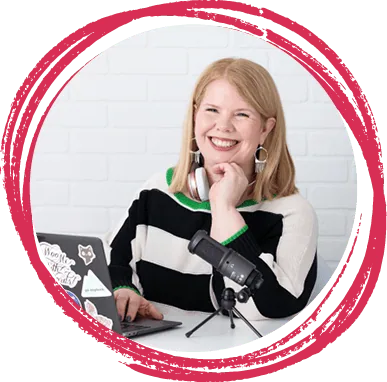
I’m Maggie Patterson (she/her), and services businesses are my business.
I have 20+ years of experience with client services, am a consultant for agency owners, creatives, and consultants, and vocal advocate for humane business practices rooted in empathy, respect, and trust.
Read or Listen to the Latest


For Solo Business Owners

Growing a solo service business is tough.
It’s even harder when you’re bombarded with BS advice that steers you away from your values and why you started your business in the first place.
This is the podcast for solo creatives and consultants who want to remain as a team of one and have zero interest in the hustle and grind of typical business teachings.
Subscribe now and never miss an episode.



For Micro Agency Owners

Most podcasts for agency owners obsess over revenue growth as the ultimate success metric.

But here’s the truth: not everyone wants to make millions. Your goal might be to build a sustainable business that lets you have a life and doesn’t run you into the ground.
Join me as I spill my shameless confessions and share everything I’ve learned about building a micro agency that skips the BS of tired and typical agency teachings.
Follow Now on All Major Podcast Platforms